A well-functioning attic ventilation system is crucial for maintaining a healthy and energy-efficient home. Without proper ventilation, attics can become sweltering hot in the summer and freezing cold in the winter, leading to increased energy bills and potential damage to your home.
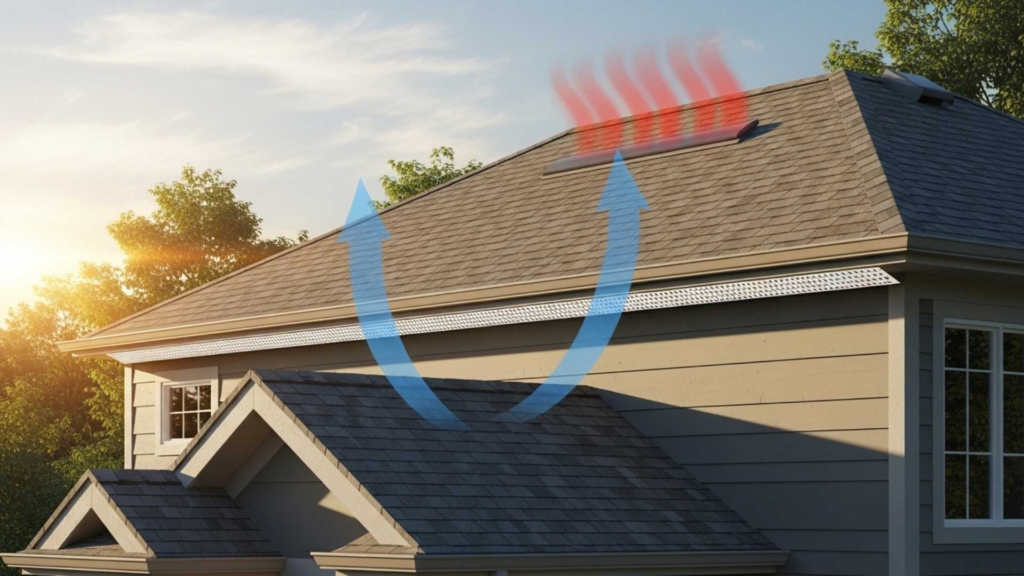
Effective roof ventilation for attic and energy efficiency involves a combination of soffit and ridge vents. Soffit vents allow cool air to enter the attic, while ridge vents enable hot air to escape, creating a continuous flow of air that helps regulate attic temperatures.
By understanding the importance of energy-efficient ventilation, homeowners can take steps to improve their attic’s ventilation, potentially lowering their energy bills and extending the lifespan of their roofing materials.
Key Takeaways
- Proper attic ventilation is essential for maintaining a healthy and energy-efficient home.
- Soffit and ridge vents work together to regulate attic temperatures.
- Effective ventilation can help lower energy bills and extend roofing material lifespan.
- A well-designed ventilation system is crucial for preventing attic damage.
- Homeowners can benefit from understanding the importance of energy-efficient ventilation.
What is Roof Ventilation and Why is it Important?
Effective roof ventilation is essential for a well-functioning home, impacting both energy efficiency and overall comfort. It involves the circulation of air through the attic space, ensuring that hot air is expelled and cooler air is drawn in. This process is crucial for maintaining a healthy attic environment and reducing the strain on heating and cooling systems.
Understanding the Basics of Roof Ventilation
Roof ventilation works on the principle of allowing air to circulate through the attic. This is typically achieved through a combination of intake vents, such as soffit vents, and exhaust vents, like ridge vents. As warm air rises, it escapes through the exhaust vents, creating a negative pressure environment that pulls cooler air in through the intake vents.
The benefits of this process are multifaceted. Proper ventilation helps to reduce heat buildup in the attic during warmer months, which can significantly lower cooling costs. In colder climates, it aids in preventing moisture accumulation, which can lead to issues like mold and ice dams.
| Ventilation Component | Function | Benefits |
|---|---|---|
| Soffit Vents | Intake vents that allow cool air to enter the attic | Reduces heat buildup, prevents moisture issues |
| Ridge Vents | Exhaust vents that allow hot air to escape | Enhances attic cooling, reduces energy consumption |
The Impact on Home Energy Efficiency
The impact of roof ventilation on home energy efficiency cannot be overstated. By maintaining a cooler attic space during the summer, the load on air conditioning systems is reduced, leading to lower energy bills. In the winter, proper ventilation helps to prevent the formation of ice dams, which can cause significant damage to roofing materials and insulation.
Moreover, energy-saving attic ventilation systems can lead to long-term savings. Homeowners can expect a reduction in their energy consumption, which not only saves money but also contributes to a more sustainable living environment.
- Reduces energy consumption through efficient cooling
- Prevents moisture-related issues, reducing maintenance costs
- Enhances the overall comfort of the living space
How Soffit and Ridge Vents Work Together
Soffit and ridge vents are two critical components that, when used in tandem, provide optimal attic ventilation. This synergy is essential for maintaining a healthy, energy-efficient home.
The Role of Soffit Vents
Soffit vents are installed in the soffit area, which is the underside of the roof’s eaves. They allow fresh air to enter the attic, promoting air circulation and helping to reduce heat buildup during warmer months. By facilitating the intake of cooler air, soffit vents play a crucial role in balancing the temperature within the attic.
The Function of Ridge Vents
Ridge vents, on the other hand, are installed along the peak of the roof, allowing warmer air to escape from the attic. As warm air rises, it exits through the ridge vent, creating a negative pressure environment that pulls in fresh air through the soffit vents. This continuous cycle of air exchange is vital for reducing moisture accumulation and preventing potential damage to the roof structure.
Together, soffit and ridge vents create an effective attic ventilation solution that not only enhances the comfort of your living space but also contributes to the longevity of your roof.
Benefits of Proper Attic Ventilation
Effective attic ventilation offers numerous benefits, including improved energy efficiency and a longer roof lifespan. By ensuring that your attic is well-ventilated, you can create a healthier and more sustainable living environment.
One of the primary advantages of proper attic ventilation is its impact on energy consumption. As noted by energy efficiency experts, a well-ventilated attic can significantly reduce the strain on heating and cooling systems, leading to lower energy bills.
Reducing Heat Accumulation
In the summer, attics can become extremely hot, with temperatures often reaching 150°F or more. This heat accumulation can radiate down into the living spaces, increasing cooling costs. Proper ventilation helps to mitigate this issue by allowing hot air to escape, thus reducing the need for excessive air conditioning.
“Adequate attic ventilation can reduce summer attic temperatures by up to 50°F, significantly improving the overall energy efficiency of a home.”
This reduction in heat accumulation not only improves energy efficiency but also helps extend the lifespan of roofing materials by reducing the thermal stress they undergo.
Preventing Moisture Buildup
Moisture buildup in the attic is another issue that proper ventilation can address. During the winter, warm, moist air from the living spaces can rise into the attic, where it can condense on cooler surfaces, leading to mold, mildew, and structural damage. By ensuring adequate ventilation, homeowners can prevent moisture buildup and the associated problems.
- Reduces the risk of mold and mildew
- Prevents ice dams from forming in the winter
- Helps maintain the structural integrity of the roof
By reducing heat accumulation and preventing moisture buildup, proper attic ventilation plays a crucial role in improving energy efficiency and maintaining a healthy roof. As such, it’s an essential consideration for homeowners looking to enhance their home’s sustainability and durability.
Signs You Need to Improve Your Roof Ventilation
Recognizing the signs of inadequate roof ventilation is crucial for maintaining a healthy and energy-efficient home. Poor ventilation can lead to a range of issues that affect not only the attic but also the overall comfort and integrity of your home.
Uncomfortable Temperatures in the Attic
One of the primary indicators of inadequate roof ventilation is extreme temperatures in the attic. During the summer, a poorly ventilated attic can become extremely hot, sometimes reaching temperatures that are significantly higher than the outside temperature. This excessive heat can radiate down into your living spaces, making your home feel warmer and causing your air conditioning system to work harder.
In the winter, poor ventilation can lead to moisture accumulation, which can result in mold and mildew growth. This not only affects the air quality inside your home but can also damage the structural elements of your roof.
Ice Dams on Your Roof
Ice dams are another significant sign that your roof ventilation needs improvement. These occur when snow on your roof melts due to a warm attic and then refreezes at the roof’s edge, forming a dam. This can cause water to back up under your shingles, potentially leading to leaks and damage to your home’s interior.
Improving your roof ventilation can help prevent ice dams by keeping your roof cooler in the winter. This reduces the likelihood of snow melting unevenly and minimizes the risk of ice dam formation.
By addressing these signs and improving your roof ventilation, you can enhance your home’s energy efficiency, reduce the risk of structural damage, and maintain a more comfortable living environment.
Common Roof Ventilation Systems Explained
When it comes to roof ventilation, homeowners have several options to consider, including passive and active systems. Understanding these systems is crucial for making informed decisions about your attic ventilation needs.
Roof ventilation systems are designed to regulate airflow in the attic, reducing heat buildup and moisture accumulation. There are two primary types of ventilation systems: passive and active.
Passive vs. Active Ventilation
Passive ventilation relies on natural airflow to ventilate the attic. This type of system uses vents installed in the soffit and ridge of the roof to allow hot air to escape and cooler air to enter. Passive ventilation is energy-efficient and cost-effective, making it a popular choice among homeowners.
Active ventilation, on the other hand, uses mechanical devices to enhance airflow. This can include powered vents, such as turbine and power vents, which are designed to exhaust hot air more efficiently.
Features of Turbine and Power Vents
Turbine vents use wind power to spin a turbine, which creates a negative pressure environment that pulls hot air out of the attic. These vents are particularly effective in windy areas and can be an excellent addition to a passive ventilation system.
Power vents, also known as powered attic ventilators, use electricity to operate a fan that exhausts hot air from the attic. These vents can be thermostatically controlled, allowing them to turn on automatically when the attic temperature reaches a certain threshold.
Some key benefits of turbine and power vents include:
- Enhanced airflow and ventilation
- Reduced heat buildup and energy costs
- Increased effectiveness in extreme weather conditions
By understanding the different types of roof ventilation systems, homeowners can make informed decisions about their attic ventilation needs and enjoy a more energy-efficient and comfortable home.
Choosing the Right Ventilation System for Your Home
With various ventilation systems available, picking the right one for your home can be a daunting task, but it’s essential for energy-saving attic ventilation. The ideal system ensures a healthy and energy-efficient attic space, which is vital for your home’s overall comfort and durability.
Factors to Consider
When selecting a ventilation system, several factors come into play. These include the size of your attic, the climate you live in, and the type of roofing material used. For instance, homes in warmer climates may benefit more from active ventilation systems, which can be more effective at reducing heat buildup.
Another crucial factor is the balance between intake and exhaust vents. A well-balanced system ensures that your attic has adequate airflow, preventing moisture buildup and reducing the risk of ice dams in colder climates.
Professional Installation vs. DIY
Once you’ve determined the right ventilation system for your home, the next decision is whether to opt for professional installation or a DIY approach. While DIY can be cost-effective, professional installation ensures that the system is installed correctly and functions optimally.
Professionals can also provide valuable insights into the best ventilation solutions for your specific needs, potentially saving you money in the long run through improved energy efficiency and reduced maintenance costs.
How Roof Ventilation Affects Energy Bills
Understanding how roof ventilation affects energy bills is essential for homeowners looking to improve their home’s energy efficiency. Effective roof ventilation is crucial for maintaining a balanced temperature in the attic, which in turn affects the overall energy consumption of the house.
Understanding Energy Loss
Energy loss in homes is often attributed to poor insulation and inadequate ventilation. When the attic is not properly ventilated, it can lead to a buildup of heat during the summer and moisture during the winter. This not only makes the living space uncomfortable but also puts extra strain on the heating and cooling systems, leading to increased energy bills.
Key factors contributing to energy loss include:
- Insufficient attic ventilation
- Poor insulation
- Air leaks around windows and doors
As HomeAdvisor notes, “A well-ventilated attic can help reduce energy costs by allowing your heating and cooling systems to operate more efficiently.” Proper ventilation ensures that the attic remains cool in the summer and dry in the winter, thereby reducing the load on the HVAC system.
Long-term Savings with Effective Ventilation
Investing in a proper roof ventilation system can lead to significant long-term savings. By reducing the strain on heating and cooling systems, homeowners can enjoy lower energy bills. Moreover, effective ventilation helps extend the lifespan of roofing materials by preventing damage from excessive heat and moisture.
“Proper attic ventilation is key to a healthy and energy-efficient home. It not only reduces energy consumption but also helps in maintaining the structural integrity of the roof.”
To achieve these benefits, it’s essential to choose the right ventilation system for your home. Factors such as climate, roof size, and insulation levels should be considered. Consulting with a professional can help determine the most effective ventilation strategy.
By improving roof ventilation, homeowners can not only enhance their home’s energy efficiency but also contribute to a more sustainable living environment. As the demand for energy continues to grow, adopting measures to reduce energy consumption becomes increasingly important.
Maintenance Tips for Your Roof Ventilation System
A well-maintained roof ventilation system is essential for energy efficiency and roof durability. Proper maintenance not only prolongs the system’s lifespan but also ensures it operates at its best, providing a healthier attic environment.
Regular Inspections
Regular inspections are crucial for identifying potential issues before they become major problems. It’s recommended to inspect your roof ventilation system at least twice a year, in the spring and fall. During these inspections, check for signs of damage, wear, and tear on both soffit and ridge vents. Ensure that all components are securely in place and functioning as intended.
Some key areas to focus on during inspections include:
- Checking for blockages or debris in vents
- Inspecting for animal or insect infestation
- Verifying that vents are properly secured
Cleaning and Clearing Debris
Cleaning and clearing debris from your roof ventilation system is vital for maintaining its efficiency. Leaves, branches, and other debris can clog vents, hindering airflow and potentially leading to moisture buildup. Use a soft-bristled brush or a leaf blower to gently remove debris from soffit and ridge vents.
For more thorough cleaning, consider the following steps:
- Turn off power to any active ventilation systems
- Gently remove large debris by hand or with a tool
- Use a vacuum or compressed air to remove finer particles
By maintaining your roof ventilation system, you can ensure it continues to provide energy-efficient ventilation and protects your attic from potential damage. Regular maintenance is a simple yet effective way to enhance your home’s overall energy efficiency and roof health.
| Maintenance Task | Frequency | Benefits |
|---|---|---|
| Inspect roof ventilation system | Twice a year | Early detection of issues, ensures proper function |
| Clean soffit and ridge vents | As needed, typically annually | Prevents blockages, maintains airflow |
| Check for animal or insect infestation | During regular inspections | Prevents damage from nests or burrows |
Conclusion: Invest in Effective Roof Ventilation
Effective roof ventilation is crucial for maintaining a healthy and energy-efficient home. By understanding the importance of soffit and ridge vents, homeowners can take the first step towards reducing energy bills and prolonging the lifespan of their roofing system.
Key Benefits of Roof Ventilation
Proper attic ventilation offers numerous benefits, including reduced heat accumulation, prevention of moisture buildup, and lower energy costs. By allowing hot air to escape and fresh air to enter, roof ventilation systems help regulate attic temperatures, reducing the strain on heating and cooling systems.
Assess Your Current System
Homeowners should assess their current roof ventilation system to ensure it is functioning correctly. Regular inspections and maintenance can help identify potential issues before they become major problems. By investing in energy-saving attic ventilation, homeowners can enjoy a more comfortable living space while reducing their energy expenses.
By prioritizing roof ventilation benefits, homeowners can create a more sustainable and cost-effective home environment. Effective roof ventilation is a simple yet impactful way to improve home comfort and reduce energy bills.